
What Is Bitcoin? A Beginner's Guide to How It Works
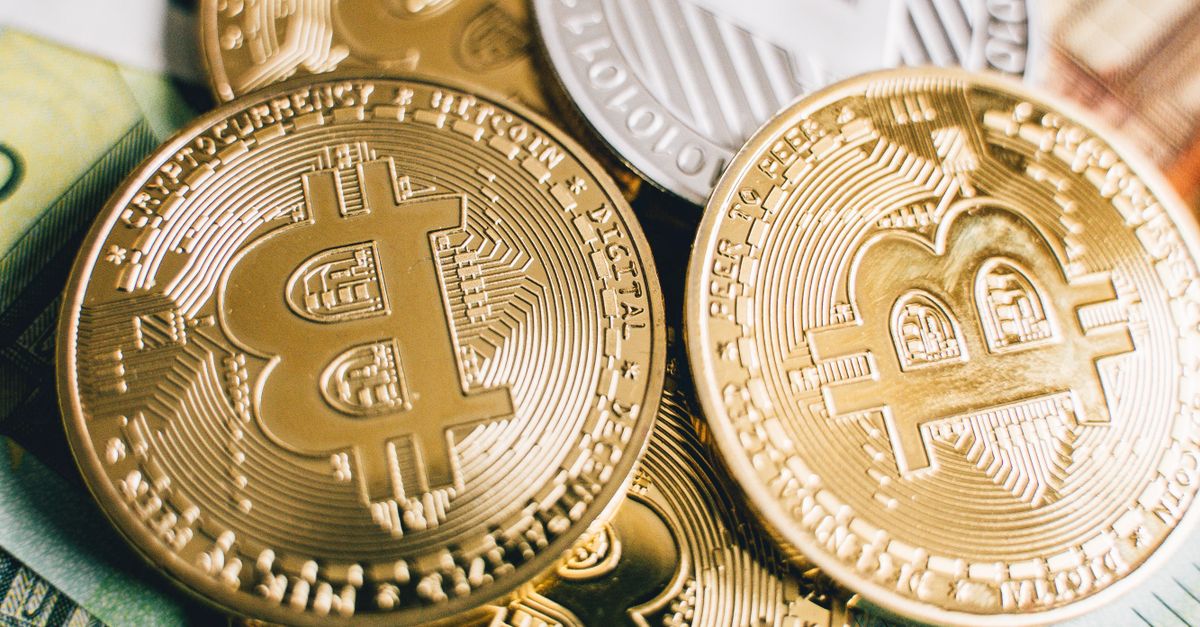
Bitcoin is digital money that runs without a bank, a government or any single company in charge. It lets people send value to each other over the internet, anywhere in the world, using a shared public record that no one can quietly rewrite. Since its launch in 2009 it has grown from a niche experiment into an asset held by millions of people and major institutions — and it remains famously volatile. This guide explains, in plain English, what Bitcoin is, how it works, and what to watch out for.
The basic idea
Bitcoin (BTC) is a cryptocurrency: a form of money that exists only electronically and is secured by cryptography rather than by a central authority. When you hold bitcoin, you do not hold a coin or a note. You hold the ability — controlled by a private key, explained below — to move a balance recorded on Bitcoin's public ledger.
A few defining features set it apart from ordinary money. It is decentralised, meaning thousands of computers worldwide run the network together. It is scarce by design: the software caps the total supply at 21 million bitcoin, a limit written into the code from the start. And it is divisible — each bitcoin splits into 100 million tiny units called satoshis, so you can buy a small fraction rather than a whole coin.
Bitcoin was described in a 2008 whitepaper by the pseudonymous Satoshi Nakamoto, whose real identity remains unknown, and the network went live in January 2009.
The blockchain, in plain English
The blockchain is Bitcoin's shared record book. Every transaction ever made is grouped into "blocks," and each block is cryptographically linked to the one before it, forming a chain. Thousands of computers, called nodes, each keep a full copy of this ledger and check new entries against the same rules.
Because so many independent copies exist and each block is locked to its neighbours with mathematics, altering an old transaction would require redoing an enormous amount of work and overpowering the rest of the network — which is why the record is considered effectively tamper-proof. Anyone can inspect the blockchain with free online tools; it is public, though it shows addresses rather than names.
How mining works
Mining is how new transactions get confirmed and how new bitcoin enter circulation. Miners use powerful computers to race to solve a mathematical puzzle — essentially guessing an enormous number of numbers until one fits the required pattern. Roughly every ten minutes, a winner adds the next block of transactions to the chain and receives a reward of newly created bitcoin plus transaction fees.
This process, called proof of work, is deliberately expensive: it makes attacking the network cost more than anyone could realistically gain. The reward halves roughly every four years in an event known as the "halving," which is how the 21 million cap is enforced over time. Mining uses a great deal of electricity, which is one of the most common criticisms of Bitcoin.
How people buy bitcoin
Most beginners buy through a regulated cryptocurrency exchange or a mainstream investing app that offers crypto. The typical steps are: create an account, verify your identity (exchanges are required to do this), deposit money by bank transfer or card, and place a buy order. You can usually buy a small amount — there is no need to purchase a whole bitcoin.
Fees, spreads and withdrawal rules vary widely between platforms, so it is worth comparing them and checking what investor protections apply in your country before depositing money.
How to store it: wallets and keys
Bitcoin is stored in a wallet, which is really a way of managing your private key — a secret code that proves ownership and authorises spending. Whoever controls the private key controls the coins. Wallets come in two broad types:
- Hot wallets are apps on your phone or computer, or accounts on an exchange. They are convenient for small amounts but connected to the internet, so they carry more risk.
- Cold wallets are hardware devices or paper backups kept offline. They are safer for larger, long-term holdings, but if you lose the device and its recovery phrase, the bitcoin is gone for good.
A common saying in crypto sums it up: "not your keys, not your coins." Leaving bitcoin on an exchange means trusting that company; several major exchanges have collapsed or been hacked in the past.
Why the price swings so much
Bitcoin's price is volatile — double-digit percentage moves in a week are not unusual. The reasons include its fixed supply meeting shifting demand, a market that trades around the clock worldwide, heavy speculation and leverage, and sensitivity to regulation, macroeconomic news and sentiment. Unlike a company stock, bitcoin produces no earnings or dividends, so its price rests entirely on what buyers are willing to pay. Anyone considering it should be prepared for the real possibility of steep losses, including losing everything invested.
Common scams to know
Bitcoin's popularity makes it a favourite tool of fraudsters. Watch for: guaranteed-return schemes and fake celebrity endorsements; "pig butchering" romance or social-media scams that walk you into depositing more and more; phishing sites and apps that steal your keys or recovery phrase; and impostors posing as support staff — no legitimate service will ever ask for your recovery phrase. Payments are also effectively irreversible, which is why scammers prefer them. The US SEC's Investor.gov and the UK's FCA both publish warnings and registers of authorised firms; check them before trusting any platform.
The bottom line
Bitcoin is a scarce, decentralised digital asset maintained by a global network rather than a central bank. Its technology is genuinely innovative, but its price is highly volatile and the surrounding industry still carries real risks of fraud and loss. If you explore it at all, start small, use reputable regulated platforms, secure your keys properly, and never invest money you cannot afford to lose. Current prices, rules and tax treatment change often — verify them with official sources in your country before acting.
This article is educational information only and is not financial advice. Cryptocurrency is high-risk and largely unregulated in many countries; you could lose all the money you invest.
Sources: Bitcoin.org — Bitcoin FAQ and "How does Bitcoin work?", Bitcoin whitepaper — "Bitcoin: A Peer-to-Peer Electronic Cash System" (Satoshi Nakamoto, 2008), U.S. Securities and Exchange Commission — Investor.gov crypto asset investor alerts, UK Financial Conduct Authority — consumer warnings on cryptoasset investing