
Forget Rate Cuts: JPMorgan Now Expects Three More Fed Rate Hikes
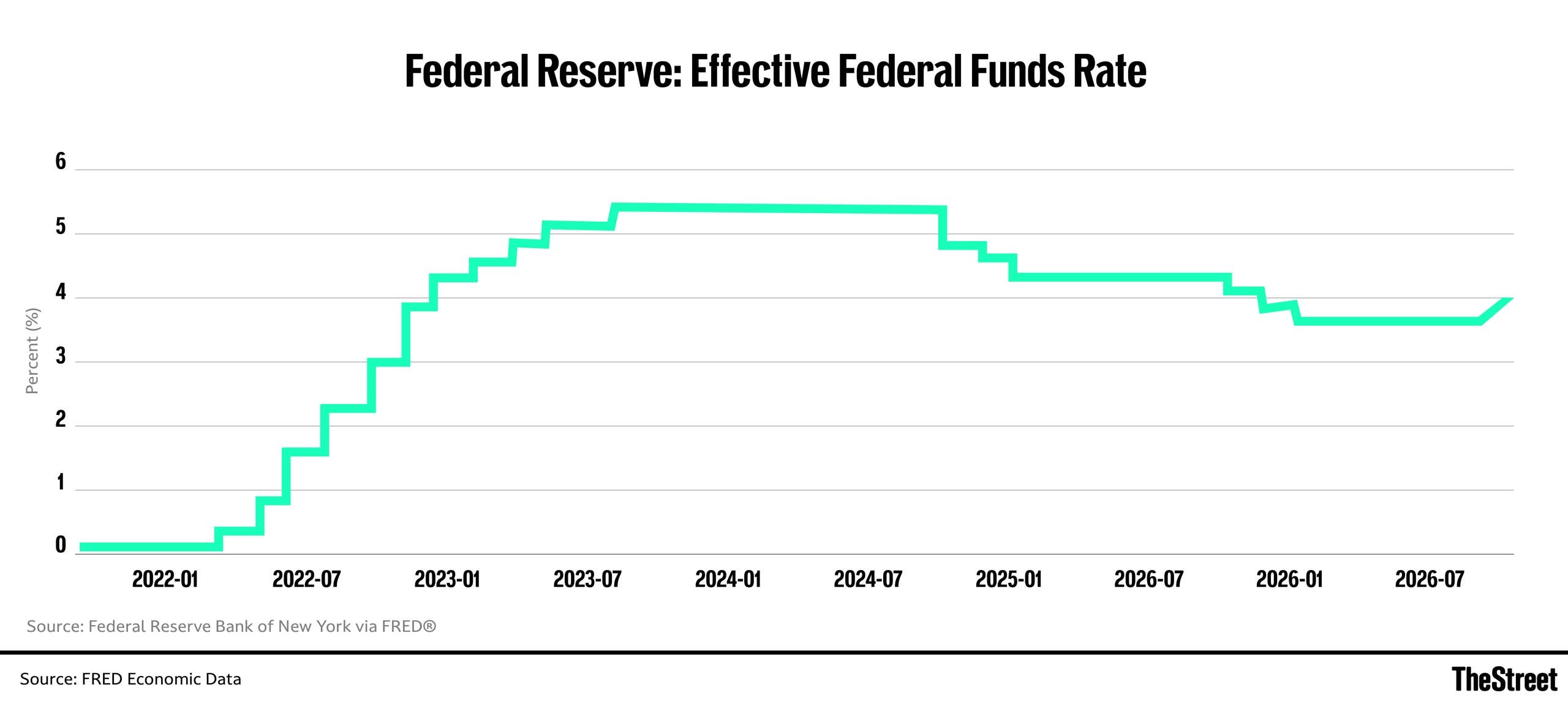
Anyone still hoping the Federal Reserve will start cutting interest rates soon got a cold shower this week. JPMorgan, America's biggest bank, has scrapped its "one and done" forecast and now expects the Fed to raise rates three more times in a row — in December, January and March.
In a client note dated November 19 and obtained by Reuters, JPMorgan economists led by Michael Feroli called for quarter-point hikes at each of the next three Federal Open Market Committee meetings. That would lift the federal funds target range from today's 3.75%–4.00% to 4.50%–4.75% by March 2027. The bank does not expect any rate cuts until 2028.
Why Wall Street flipped
The shift is driven by inflation that refuses to cool. Price growth has run above the Fed's 2% target for more than five and a half years, and recent data has pointed the wrong way. When the FOMC held rates steady in October, it did so on a divisive 10-2 vote, and the minutes of that meeting — released November 18 — show several officials described the pause as a "close call." According to Bloomberg's summary of the minutes, nearly all officials expect further hikes, and two policymakers said an increase larger than 25 basis points could be justified in December if inflation data comes in worse than expected.
JPMorgan is not alone. BofA Global Research and Deutsche Bank also expect 25-basis-point hikes at each of the next three meetings, and the CME FedWatch tool has been pricing in roughly a 100% probability of a December hike.
"These hikes aren't to deliver a bad labor market, but to preserve credibility when they have no compelling narrative for a pause," JPMorgan's strategists wrote, noting that the labor market itself has not been a source of inflation pressure.
Fed officials are saying it out loud
Senior Fed figures have spent the week making the same case in public. Governor Lisa Cook, who dissented in October because she wanted to raise rates, said on Friday that the current policy rate is not high enough to deal with inflation levels she views with "great concern." The quarter-point hike delivered in September "was not enough," Cook said in a speech, warning that "waiting longer to implement rate increases risks getting behind the curve" — which could force even larger hikes later.
Governor Christopher Waller has gone further, floating a jumbo 50-basis-point hike in December and telling CNBC on November 18 that "you might need to, like, shock people." Chicago Fed President Austan Goolsbee, meanwhile, pointed at the AI investment boom as an overheating risk, saying the economy may not be able to handle "that kind of a pig through the python."
Complicating everything, Chair Kevin Warsh has dispensed with the forward guidance markets used to rely on since taking over in May. JPMorgan calls the result an era of "forward silence": with no narrative as a "pole star," policy becomes reactive to each new data release — starting with the November inflation report due days before the December 8-9 meeting.
The political storm around the Fed
The tightening path puts the independent central bank on a collision course with the White House. President Donald Trump repeated his demand for drastic rate cuts at a November 20 press conference, saying rates are high because the Fed's leaders are "too political" and claiming, "Whenever we announce good numbers, they raise the rates."
What it means for your money
Rate hikes flow straight into household budgets. Credit card APRs, home-equity loans and other variable-rate borrowing are tied to the Fed's benchmark, so their costs would keep rising into early 2027. Mortgage rates, which follow Treasury yields, would face upward pressure too. The flip side: savers should keep seeing strong yields on high-yield savings accounts and money market funds for longer.
For investors, the message from Wall Street is becoming hard to ignore: the wait for cheaper money is going to take longer than almost anyone expected a few months ago.
This article is for general information only and is not financial advice. Interest-rate forecasts change with new data; consider speaking to a qualified financial adviser before making borrowing or investment decisions.
Sources: Reuters — JPMorgan client note obtained by Reuters (November 19, 2026); "Fed's Cook says rate hikes needed to lower high inflation" (November 20, 2026), Bloomberg News — summary of the FOMC October meeting minutes (November 18, 2026), TheStreet — "J.P. Morgan Sees More Fed Rate Hikes in 2027" (November 21, 2026), CNBC — interview with Federal Reserve Governor Christopher Waller (November 18, 2026), Image: TheStreet